Source: http://www.infoworld.com/d/computer-hardware/hackintosh-vs-macintosh-choose-wisely-208301
Friday, 7 December 2012
Hackintosh vs. Macintosh: Choose wisely
If you're thinking of buying a computer from Apple and opt for its cheapest Mac Mini line, you'll be presented with several upgrade options at checkout. For the 2.3GHz quad-core version, for example, you can move up to 16GB of RAM memory for $300, or ditch the standard 1TB hard drive and upgrade to a zippier 256GB solid-state drive, again for $300.

Thursday, 6 December 2012
Adobe Launches Content Creation, Delivery, Playback Apps
Adobe Systems will be highlighting its new advances in video and dynamic media software technologies that improve the creation and delivery of content across personal computers, televisions and mobile devices at the National Association of Broadcasters 2009 show in Las Vegas. Adobe also announced Adobe Flash Platform for the Digital Home, which brings Flash to TVs, among other things....


Source: http://feeds.ziffdavisenterprise.com/~r/RSS/publishgraphics/~3/YHNu5PEsZe0/
Windows 8 not boosting PC sales, NPD says
Windows device sales in the U.S. including desktops, notebooks, and tablets are not getting a boost from the October 26 launch of Windows 8, an online report says. Notebook sales were down 21 percent during the first four weeks of Windows 8 general availability compared to the same time period in 2011, according to market research firm NPD Group . Desktop sales did a little better than laptops during that time dropping just 9 percent year-over-year. Overall, Windows 8 devices accounted for 58 percent of all Windows device sales in the U.S. between October 21 and November 17, 2012, NPD said.
[RELATED: Windows 8: Does its 1-month report card read pass or fail? ]
Nobody's touching Windows 8 tablets
Perhaps most troubling for Microsoft and device makers is the relatively lackluster reception thus far to Windows 8 tablets. Sales for one-panel touch slates running Windows 8 were almost non-existent during the launch period making up less than one percent of all Windows 8 device sales, NPD said. That's problematic for Microsoft, since the marquee feature of Windows 8 is the new touch-friendly start screen designed to appeal to tablet users.
To read this article in full or to leave a comment, please click here
Source: http://www.pcworld.com/article/2017392/windows-8-not-boosting-pc-sales-npd-says.html
Sony Duo 11 Ultrabook review: Blurring the line between tablet and laptop
Unpacking the Sony Duo 11 (aka the SVD1123CXB) reveals what appears to be a tablet; no keyboard is immediately visible. Yet when you pick it up, it seems a little hefty for a tablet. What's going on here? Well, the Duo 11 is not just a tablet. Lifting up the top edge tilts the display and reveals a sliding keyboard hidden beneath the panel.
Welcome to the world of Windows 8 sliders. The Duo 11 keeps its keyboard tucked underneath the tablet's bottom chassis—it's there when you need it, but you can hide it away when you don't.
 Sony
SonyThe Duo 11 weighs in at 2 pounds, 13 ounces, decidedly on the light side for an Ultrabook. The 11.6-inch screen offers a full 1920-by-1080-pixel IPS touchscreen panel that provides good image quality and color fidelity. Sony also built a full Wacom digitizer into the touchscreen, complete with a stylus supporting 256 levels of pressure sensitivity. Artists will appreciate the digitizer, but Sony didn't think to include a slot to store the stylus in the body of the unit, so you'll need to keep track of it as you travel.
The Duo 11 meets Intel's Ultrabook spec: It's light, it boots quickly from the 128GB solid-state drive, and it measures just 0.71 inch thick. The machine carries an Intel Core i5-3317U processor, and our review unit had 8GB of system RAM (the standard amount of included memory is 6GB). Since it's an Ultrabook, its graphics hardware consists of the on-board Intel HD 4000 GPU built into the Ivy Bridge low-voltage processor.
To read this article in full or to leave a comment, please click here
Cisco Still Leads Slowing Video Conferencing Market: IDC
Revenue in the space fell 4.8 percent in the third quarter, hindered by a weak global economy and a drop in sales of high-end telepresence systems. 


Source: http://feeds.ziffdavisenterprise.com/~r/RSS/eweek_voip/~3/k9KS6cIjC8M/
Wednesday, 5 December 2012
Windows Phone Will Target Smartphone Midmarket
Next up for Windows Phone: attacking the middle range of the market. 


"We are dramatically broadening the set of price points in Mango-related phones that we can reach," Andy Lees, president of Microsoft's Windows Phone division, told the audience during the Asia D conference Oct. 19. "That's particularly important because going lower down in price point opens up more addressable market."
Until this point, Microsoft had positioned Windows Phone as more of a competitor to high-end devices such as Apple's iPhone and the Motorola Droid. But Microsoft's traditional aim with any of its products has been to capture as big an audience as possible, so a thrust toward the smartphone midmarket is perhaps inevitable.
For a couple of months, rumors have circulated about a stripped-down Windows Phone OS code-named Tango, aimed at lower-cost hardware and developing markets such as India and China. Back in August, Mary Jo Foley wrote on her All About Microsoft blog about two new Tango releases that could expand Windows Phone into new markets and load onto those cheaper devices.
At the moment, Microsoft is mostly concerned with pushing Mango, a wide-ranging update with some 500 tweaks and features, onto Windows Phone. That's happening in conjunction with a host of new manufacturers, including Nokia and Samsung, prepping a host of new Windows Phone devices. Although outside research firms generally place Windows Phone's share of the smartphone market far behind that of the iPhone and Android, Microsoft hopes that the combination of boosted software and new manufacturing partners can give the platform the momentum it needs to seize a bigger portion for itself.
One of those partners, Nokia, reportedly plans to show off its first Windows Phone devices at Nokia World in London, due to start Oct. 26.
That information also came from Lees, who told the Asia D conference Oct. 19: "Next week it's going to be Nokia World, where they're going to announce their phones and how they're going to make the most out of the Windows Phone opportunity."
It'll be interesting to see what rolls out. By tossing out homegrown mobile operating systems such as Symbian in favor of Windows Phone, Nokia is betting its existence on Microsoft software allowing it to push back against Android and other competitors. I'll bet anything that Nokia's push will eventually involve Windows Phone devices targeted at that midrange. The only question is when Nokia CEO Stephen Elop will try to make that happen.


iTunes Expands to India, Russia, 54 Other Countries
 The iTunes store has opened up in Russia and a slew of other countries that were previously left off its coverage map. The 56-country expansion nearly doubles the number of countries in which iTunes is now available. Turkey, India and South Africa were also part of the launch, which Apple says will feature local and international music targeted at specific audiences. Russia may be one of the greatest challenges to Apple's music sector. Russia not only boasts a handful of legitimate downloading services, but is also one of the world's hotbeds for piracy.


Yahoo acquires video chat start-up OnTheAir
Yahoo has acquired a video chat start-up OnTheAir as the company focuses on mobile applications and services.
"When we first met with the team at Yahoo!, it was clear that everybody there is committed to making mobile products the backbone for the world's daily habits," the five-member OnTheAir team said in an announcement on their website.
The financial terms of the deal were not disclosed. Yahoo sources said the acquisition was for the talent, and that the OnTheAir product will not be continued.
One OnTheAir team member, Daniel Hopkins, was working at Google on infrastructure that supports Gmail and Google+, while Mike Kerzhner and Erik Goldman worked previously on products at Apple, according to the OnTheAir website.
To read this article in full or to leave a comment, please click here
Source: http://www.pcworld.com/article/2018582/yahoo-acquires-video-chat-start-up-ontheair.html
Review: InPaint removes unwanted elements from your photographs with a few clicks
It's all happened to us at one point or another. We take what we think is a great picture on holiday, and when we get home, we discover that a total stranger has walked right into the middle of the shot. Or you have been holding the camera in such a strange way that your fingers were in front of the lens, partially obscuring the view. Before you start crying and begin deleting the photos, try InPaint ($20, free feature-limited demo) to see if you can get rid of those unwanted elements.
InPaint removes the area of the photo you specify, then loosk at what surrounds that area to decide what should fill the now-empty space, and fills it accordingly. It's a bit of a hit-and-miss affair, with some stuff coming out remarkably well, and other times, it making the photograph worse. But with everything reversible, there's no harm in giving it a go, to see if you can get the waving idiot permanently erased from your photograph.

Start by loading up InPaint and opening the photo you want to amend. Then, using the red marker tool, paint over what you want removed. When you release the mouse, a box will appear around the painted element. All you have to do now is press the InPaint arrow button in the menu and watch the element being removed.

With basic elements with a plain background, this is easy and quick enough. But if you have elements with weird shapes and multi-coloured backgrounds and foregrounds, then you might have some problems. InPaint has another feature you can take advantage of to attempt to make the job a little easier. It is called Guide Lines. With this, you draw green lines to mark the edges of paths and backgrounds, so InPaint knows where they are. I found in my testing that this makes quite the difference in some of the photos I used.
To read this article in full or to leave a comment, please click here
Tuesday, 4 December 2012
ATandT Beefs Up 3G Net to Get Ready for new iPhone
AT T is said to be making software enhancements to its 3G network to get a bit more juice from it before a planned migration to 4G and before millions of new Apple iPhone users come on board....


Source: http://feeds.ziffdavisenterprise.com/~r/RSS/publishcontmgt/~3/wBksKfDJRGg/
SPIGEN SGP iPhone 5 case Ultra Thin Air review
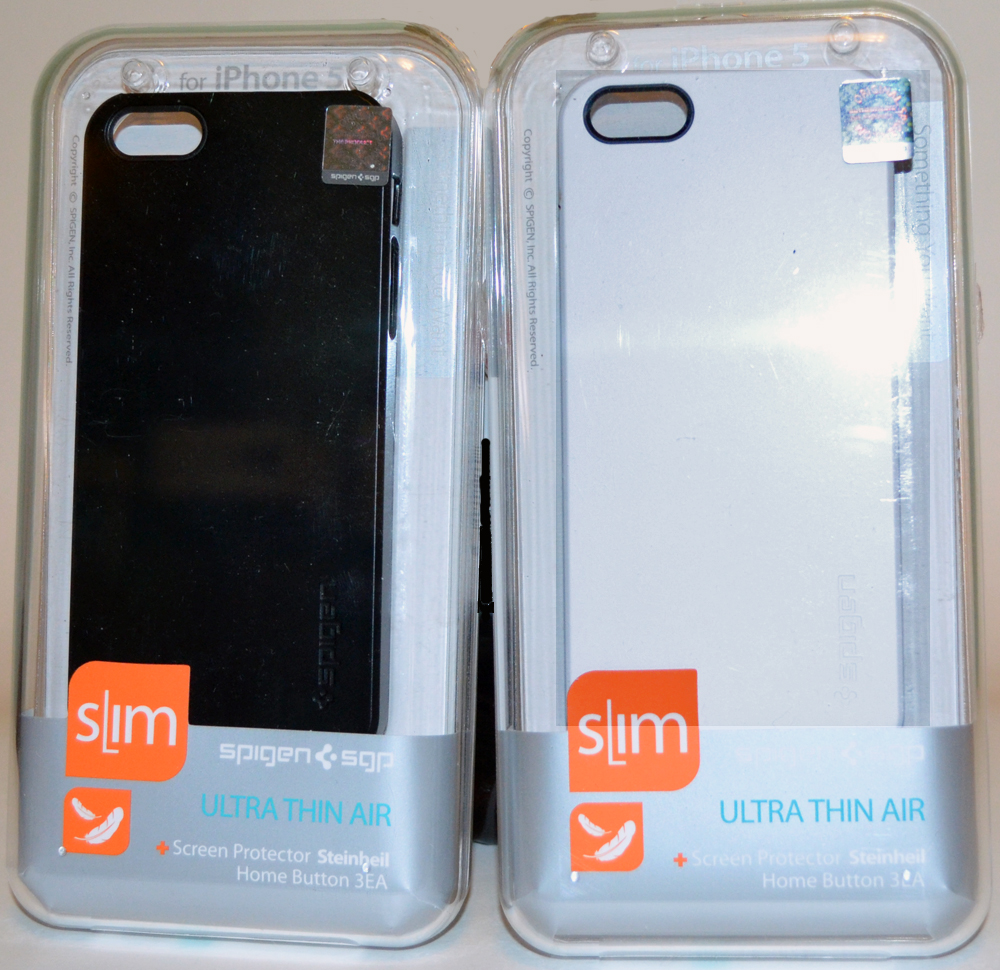
Either Apple was more forthcoming with accessories manufacturers or the rumor mill was extremely accurate, but it seems that there were a lot of cases for the new iPhone 5 available even before it was released. SPIGEN SGP sent a couple of different cases for our review, and we’ll be looking at their Ultra Thin Air case for iPhone 5 in this review.
All images can be clicked for a bigger view.
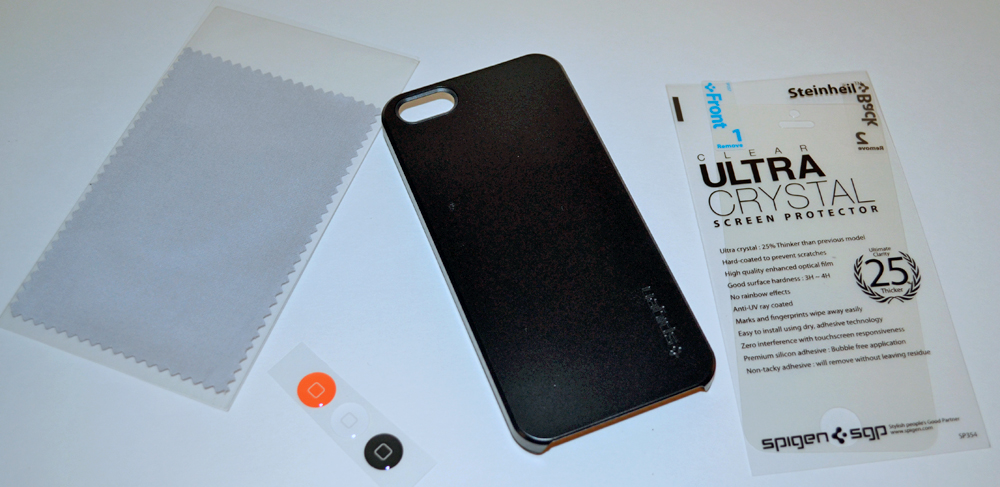
Each case comes with three Home button covers (black, white, and orange), an Ultra Crystal screen protector, and a microfiber cleaning cloth. The cases are smooth, and they don’t improve the “grip-ability” of the iPhone 5. The case adds 0.4 ounce of weight to the phone, and it’s so thin that you don’t really notice any difference in the dimensions of the iPhone 5.
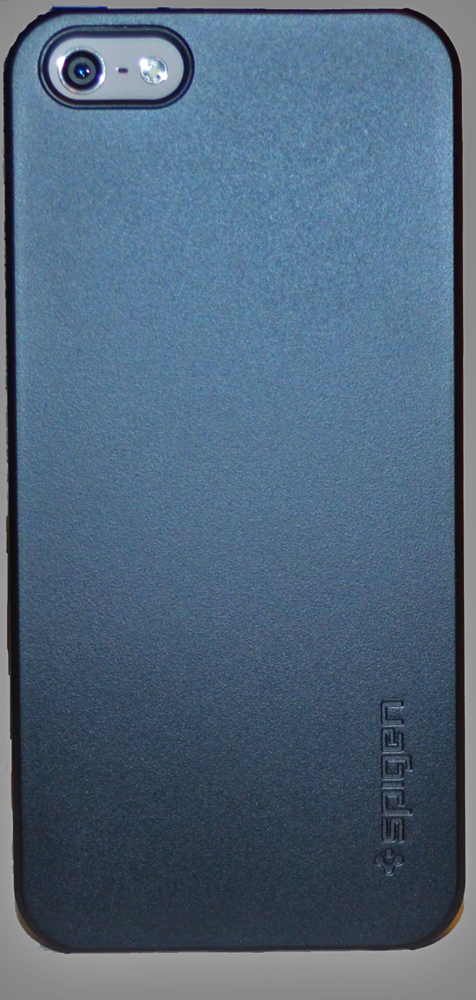
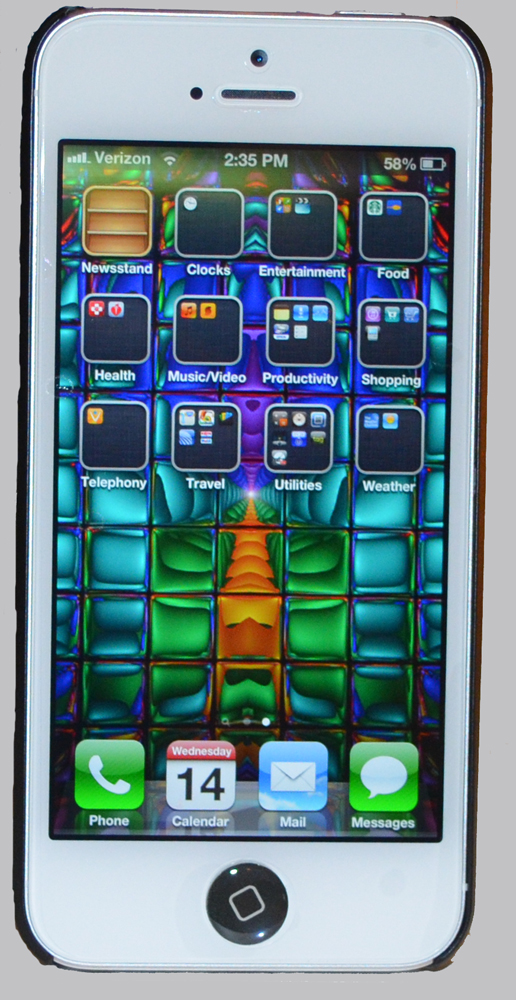
I put the black home button cover on, but you can see I got it on crooked. Luckily I have two replacements if I decide the off-kilter button bothers me. These button covers make the Home button feel more flush to the bezel.


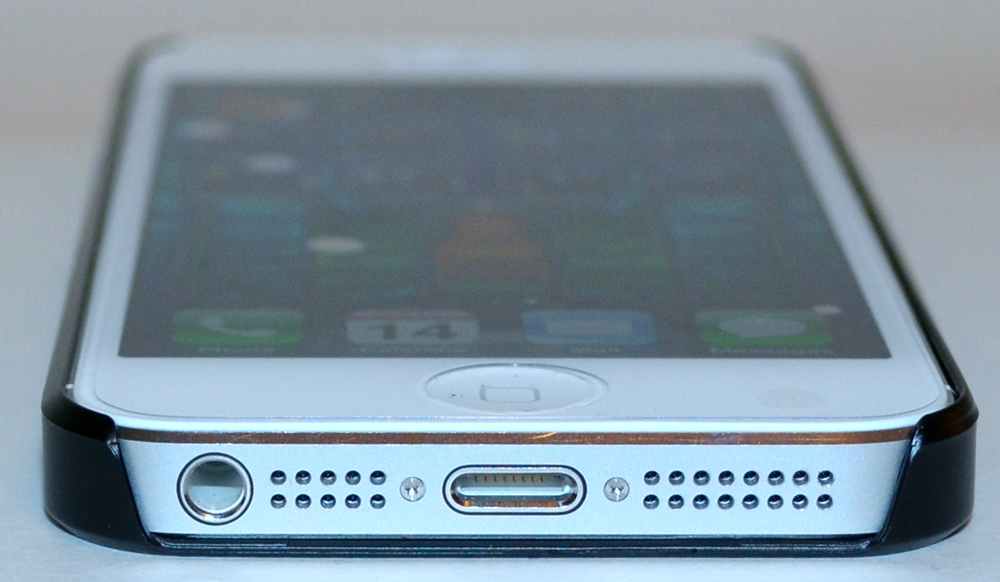

The case is very thin, but it should protect against scratches and light dings – at least to the parts that it covers. There’s no padding or cushioning inside the case, so I’m not sure how much drop protection you can expect from this case.
The screen protector is a dry-apply type, which I prefer. It went on pretty easily, and it didn’t degrade the appearance of the Retina display. I could tap, swipe, and slide my finger on the screen easily. It had cutouts for the Home button, the phone speaker, and front camera. However, it left the ambient light sensor covered.
If your biggest concern is adding some scratch protection, especially to the back of your iPhone 5, without adding any bulk or weight, you might like the SPIGEN SGP Ultra Thin Air case. If you choose the Crystal Clear one, you could still enjoy the look of the aluminum back. It does leave the edges of the glass screen unprotected, and it may not provide a lot of drop protection, though.
Product Information
| Price: | $19.99 |
| Manufacturer: | SPIGEN SGP |
| Retailer: | SPIGEN SGP |
| Requirements: |
|
| Pros: |
|
| Cons: |
|
Filed in categories: Cases and Covers, iPhone, iPad, iPod related, Reviews
Tagged: iPhone 5 cases and covers
SPIGEN SGP iPhone 5 case Ultra Thin Air review originally appeared on The Gadgeteer on December 4, 2012 at 11:00 am.
Source: http://the-gadgeteer.com/2012/12/04/spigen-sgp-iphone-5-case-ultra-thin-air-review/
Two years after debut, Gingerbread still dominant Android OS
Although Google's Android has made some impressive leaps forward over the last two years, roughly half of its users aren't seeing those improvements because 50.8 percent of Android devices are still running Android 2.3, known as Gingerbread.
The figure comes from Google's developer website, whose data is based on the number of devices that have accessed Google Play within a given 14-day period.
As Dwight Silverman at the Houston Chronicle points out, Google released Android 2.3 on December 6, 2010 – two years ago this week. The new data from Google, updated Monday, shows that the two-year-old Gingerbread still has wider distribution than any other version of Android.
Android 4.0, known as Ice Cream Sandwich, appears on 27.5 percent of devices, according to Google's data. Android 4.1 and 4.2, both known as Jelly Bean, appear on 5.9 percent and 0.8 percent of devices, respectively.
To read this article in full or to leave a comment, please click here
Upgrade your laptop

You have very few options here. Laptops just aren't that upgradable. While a desktop PC is basically a collection of off-the-shelf parts in a big, easy-to-access box, each laptop model is a unique jigsaw puzzle, with many of the pieces designed for that model, and all tightly-packed to reduce size.
But you may be able to improve your laptop:
First, consider upgrading your RAM. To find out, download and run the Crucial System Scanner. After a few seconds, this little program will bring you to a web page where you can see what kind of memory you have, what upgrades are available, and what will work in your machine.
To read this article in full or to leave a comment, please click here
Source: http://www.pcworld.com/article/262328/upgrade_your_laptop.html
Monday, 3 December 2012
NASA confirms rumors about Mars discovery 'incorrect'
No 'definitive evidence of Martian organics' has been found so far, NASA says, crushing the hopes of billions of Earthlings.
iTunes 11: I Want to Be More Impressed Than I Am
 After the iTunes 11 delivery delay, I was hoping Apple was working through a seriously complicated redesign that would vastly improve my iTunes experience. Instead, we got iTunes 11, which looks like a huge improvement, but -- if anyone out in the world is at least somewhat like me -- is just a marginal improvement with some pretty shininess built into it. Granted, iTunes has a lot of mistresses to keep happy: It's not only a jukebox hub for music, it holds movies, TV shows, podcasts, iTunes U content, books, apps, and even ringtones.


Windows 8, Bill Gates Killed Courier Tablet: Report
Microsoft's innovative "Courier" tablet prototype--which, if produced, would have offered two touch-screens bonded together in a book-style format--now has a cause of death: crushed with extreme prejudice by Windows 8. 

According to CNET's Jay Greene, who interviewed a number of unnamed executives with knowledge of the company's tablet deliberations, Microsoft CEO Steve Ballmer had a choice to make: either support Courier, which executive J Allard (famous for helping conceive and push the Xbox) touted as a complementary device to PCs and smartphones, or wait until Windows and Windows Live division President Steven Sinofsky could build a version of Windows capable of running on tablets. The latter would take substantial time.
Ballmer went to former Microsoft CEO Bill Gates, who in turn focused his laser intellect on the dilemma. And Gates had one big issue with Courier: namely, it wasn't intended to run Exchange or Outlook, instead pulling down email via the browser. "The device wasn't intended to be a computer replacement," Greene wrote. "The key to Courier, Allard's team argued, was its focus on content creation."
Gates, according to an unnamed Courier worker quoted in the article, had an "allergic reaction" to the concept. After all, Microsoft has grown on the concept of supplying an integrated ecosystem of software products, portable across a wide variety of form factors. Something that operates outside that matrix, well, is an outlier.
Within weeks, according to Greene's sources, "Courier was cancelled because the product didn't clearly align with the company's Windows and Office franchises."
Microsoft has now placed all its tablet chips on Windows 8. The operating system, due for arrival sometime in 2012, offers a Start screen loaded with colorful tiles linked to applications, and meant to operate equally well with traditional PCs and touch-centric devices. It also allows users to switch to a "regular" desktop interface.
Tablet interoperability will place Windows 8 in a head-on vector with Apple's iPad, which currently dominates the tablet space. Other touch-screen competitors, including a variety of Google Android tablets and Hewlett-Packard's TouchPad, have crashed and burned in their attempts to seize their own portion of the tablet market. That's either a portent or an opening for Microsoft, depending on how you look at it; certainly, the company intends Windows 8 to offer a robust "no compromises" experience on tablets, which could boost its appeal with the same business users who already constitute a significant portion of Microsoft's core audience.
All that being said, I can't help but feel a little twinge of sadness over Courier's premature death. It was a cool concept, even if it never saw the light of day.


Subscribe to:
Comments (Atom)